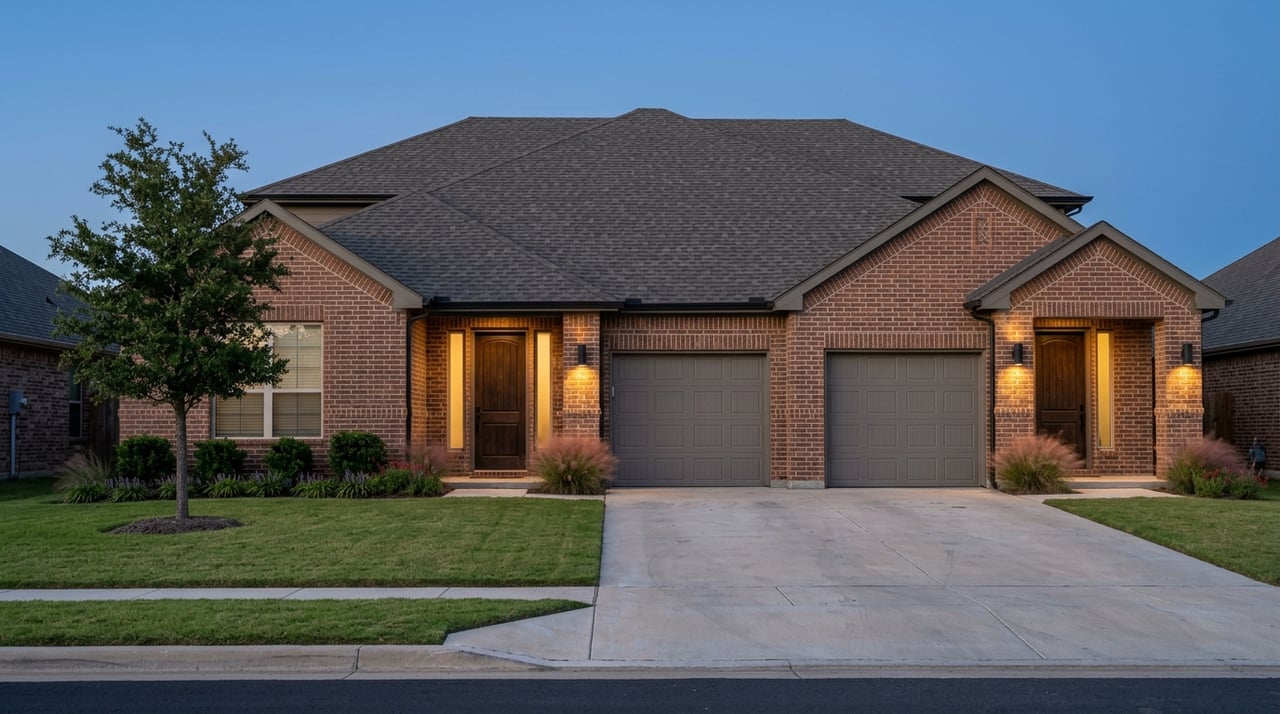
If you want your first home to do more than give you a place to live, house hacking can be a smart strategy. In a higher-cost market like McKinney, the right property can help you offset monthly housing costs, but only if the setup is legal, practical, and grounded in real numbers. This guide walks you through the small multifamily and ADU options that may work in McKinney, what local rules matter most, and how to evaluate a deal with more confidence. Let’s dive in.
Why house hacking looks different in McKinney
McKinney is not a low-cost market where almost any extra bedroom can easily cover a large share of your mortgage. Census QuickFacts report a 2024 median owner-occupied home value of $471,800, median gross rent of $1,901, and median monthly owner costs with a mortgage of $2,763. That means your margin for error can be smaller, so the property type you choose matters a lot.
In practical terms, the best opportunities often come from layouts that create more usable rental income. That may mean a duplex, a small multifamily property, or a single-family home with room for an accessory dwelling unit, also called an ADU. In McKinney, simple one-room rental strategies may be harder to pencil out than properties with a more independent setup.
McKinney housing supply shapes your options
A big part of the challenge is supply. McKinney’s 2026 housing needs assessment says 71% of housing units are single-family detached, while duplexes, triplexes, and fourplexes make up only 3% of the city’s housing stock. Small apartment buildings with 5 to 49 units account for 15%, and larger complexes make up 8%.
That tells you two things right away. First, true house-hack-friendly inventory is relatively limited. Second, when a well-located duplex or small multifamily property hits the market, competition can be strong.
The same city report shows typical market rents rising from $1,313 in 2015 to $1,885 in 2025. So demand for rental housing appears steady, but the product that best fits owner-occupant house hacking is still not especially common.
Best property types for house hacking
Duplexes and 2 to 4 unit properties
For many buyers, the cleanest house-hack option is a property that already fits a legal multi-unit use. McKinney’s zoning code defines a duplex as two dwelling units under one roof, a triplex as three units, and a quadplex as four. If you can buy one of these and live in one unit while renting the others, the math is usually easier to understand from day one.
The city’s zoning districts include dedicated duplex and multifamily categories. Relevant districts include DR, RD30, MF-1, MF-2, MF-3, MF30, MF36, and MTC. McKinney also states that MF-1 and MF-2 permit two-story apartments, fourplexes, and duplexes, while MF-3 permits three-story apartments, fourplexes, and duplexes. The DR district is intended for medium-density residential development with two-family units.
That does not mean every property inside a broad area will match your exact plan. It does mean that existing duplexes and small multifamily homes can offer a more straightforward path than trying to force a single-family property into a use it was never designed to support.
Single-family homes with ADU potential
If you prefer a detached home, an ADU may be worth exploring. McKinney allows ADUs on properties zoned for single-family residential use, but only when the lot has enough space to meet the city’s rules. This can make certain homes more flexible if you want separate living space for long-term rental use.
The city says the ADU must be smaller than the main home. If the primary home is under 1,200 square feet, the ADU can be up to 75% of the main home’s size. If the primary home is larger, the ADU can be up to 50% of the primary home’s size.
There are also design and site rules that affect feasibility. The ADU cannot be taller than the main home, must follow the same setback rules, and may require one additional parking space if the property has fewer than four parking spaces. In the Historic District Overlay, the city uses a three-space total parking standard.
McKinney’s Unified Development Code adds several more points buyers should know:
- The ADU must remain under the same ownership as the primary dwelling
- The ADU cannot have a separate electric meter
- The ADU should be located behind the front face of the main building
- In historically significant areas, exterior materials and architectural style should be complementary
For some buyers, that still works very well. For others, especially those who want separate utilities or a highly independent rental setup, those rules may change the numbers.
Why zoning verification matters
One of the biggest mistakes in house hacking is assuming a property can do what you want just because the layout looks right. In McKinney, you should verify parcel-specific zoning before you make assumptions about unit count, ADU eligibility, or permitted use.
The city directs residents to use its interactive zoning and planning map, the Where Can I Build That? tool, the Development Navigator Assistant, and the permit portal to confirm what is allowed at a specific address. This step matters because a promising listing can quickly become a poor fit if the zoning, setbacks, parking, or overlay rules do not support your plan.
A property that already fits a legal use category is usually the safer play. The more your strategy depends on variances, special approvals, or ideal-case interpretations, the less predictable the deal becomes.
Key questions to ask before you buy
Whether you are a first-time buyer or a more experienced investor, a few screening questions can help you narrow the field quickly.
Can the property legally support your plan?
Start with the intended unit count. If you want to rent out another space, make sure the property can legally support that use under current zoning and development rules. If the plan depends on future approvals, build extra caution into your analysis.
Is there enough parking?
Parking is easy to overlook, but it can become a real issue with ADUs and small multifamily properties. McKinney’s ADU standards specifically address parking, and other site rules may affect how usable the property is for both owner and tenant. A property with tight parking can feel workable on paper and frustrating in real life.
Are setbacks and height limits workable?
For ADU projects especially, lot layout matters. Even if the lot seems large, setbacks and height restrictions can reduce what is actually feasible. A quick early review can save you time and prevent expensive surprises.
Is the property in a historic area?
Historic homes or homes in designated overlay areas may require additional review. McKinney notes that a Certificate of Appropriateness review can apply to designated historic properties and older neighborhoods. That extra layer does not automatically rule out a project, but it can affect timing, design, and cost.
Do the numbers still work conservatively?
This may be the most important question of all. In McKinney, conservative underwriting is usually smarter than assuming top-of-market rent. If your deal only works with optimistic rent projections or perfect occupancy, it may not be the right fit.
A note on short-term rental plans
If your house-hack strategy depends on short-term rentals, be careful. McKinney says that effective March 2026, all short-term rentals inside city limits require annual registration. The city defines a short-term rental as a dwelling rented for less than 30 days, and renting or advertising one without a permit is a code violation.
That is why many buyers are better served by evaluating a property based on stable long-term rental income first. If the long-term numbers make sense, your plan starts from a stronger foundation.
Financing can open doors for owner-occupants
For buyers who want to live in one unit and rent the others, owner-occupant financing can make small multifamily properties more realistic. HUD states that FHA loans can be available on 1 to 4 unit properties, with down payments as low as 3.5% for eligible borrowers. That does not make every duplex or fourplex automatically financeable, but it does put more properties within reach for buyers who want to start with a primary residence.
Financing details can vary by lender and property. Before you write an offer, it is smart to confirm eligibility, occupancy requirements, and any lender overlays that may affect your options.
Taxes and rental income need a plan
House hacking is not just about finding a property. It is also about setting up the ownership and income side correctly from the beginning.
The Texas Comptroller states that Texas does not have a state property tax, and that local taxing units levy property taxes. The state also provides a residence homestead exemption, and school districts are required to provide a $140,000 residence homestead exemption. In Collin County, general homestead applications are typically filed from January 1 through April 30, and only one application is usually needed unless reapplication is requested.
Because mixed-use and partially rented properties can be fact-specific, buyers should confirm homestead treatment with Collin CAD and a tax professional. Principal residence status matters, and it is worth getting clear answers before closing.
Rental income also needs to be handled properly. IRS Publication 527 explains that most rental income must be reported, that common rental expenses may be deductible, and that owners who use a property partly for personal purposes must divide expenses between personal and rental use. Depreciation can also be part of the picture.
What a strong McKinney house hack usually looks like
In this market, the strongest house hacks are usually the simple ones. They tend to be properties that already match a legal use category, have workable parking, and do not depend on aggressive rent assumptions. That could be a duplex, a small 2 to 4 unit property, or a single-family home with clear ADU potential under current city rules.
The weaker setups are usually the ones that rely on too many moving parts. If the deal requires zoning changes, separate utility assumptions that are not allowed, or short-term rental income to make the payment comfortable, the risk level goes up quickly.
A good house hack should still feel manageable if rent comes in lower than expected. In a market like McKinney, that kind of margin matters.
If you are exploring duplexes, small multifamily properties, or homes with ADU potential in McKinney, Seek Real Estate can help you evaluate the options, verify the basics, and move forward with a clearer strategy.
FAQs
What is house hacking in McKinney?
- House hacking in McKinney usually means living in part of a property while renting out another unit or living area to help offset housing costs.
What property types work best for house hacking in McKinney?
- The best fits are often duplexes, triplexes, fourplexes, or single-family homes with ADU potential that meet McKinney’s zoning, parking, and development rules.
Can you build an ADU on a single-family lot in McKinney?
- Yes, but only on a property zoned for single-family residential use and only if the lot can meet the city’s size, setback, height, parking, and ownership requirements.
Are duplexes and fourplexes common in McKinney?
- They are relatively limited compared with single-family homes, since the city reports that duplexes, triplexes, and fourplexes make up only 3% of the housing stock.
Can you use short-term rental income for a house hack in McKinney?
- You should not assume that strategy will work, because McKinney requires annual short-term rental registration beginning March 2026 and treats unpermitted activity as a code violation.
Can you buy a 2 to 4 unit property with FHA financing in McKinney?
- FHA financing may be available for eligible owner-occupants buying 1 to 4 unit properties, but you should confirm lender requirements and property eligibility before making an offer.
What tax issue matters most for a McKinney house hack?
- One of the biggest issues is understanding how homestead treatment and rental use apply to your property, since principal residence rules and partial rental use can affect taxes and reporting.